
Accuracy and tolerance guide
Understand what affects weight control and product giveaway in dry-product filling.
Open pageCompare practical ways to improve uncertain accuracy checks in dry-product filling.
Calibration and checkweighing is usually caused by the relationship between the product, hopper, feeder and target dose. A filler that works well on one dry product may struggle when uncertain accuracy checks changes the flow into the weighing system.
The solution may be a different feeder, a modified hopper, slower feed control, product agitation, dust extraction, a checkweigher or a different packing layout. The most reliable route is chosen after looking at the product behaviour and the output target together.
Typical projects include finished packs, trade weight checks and quality-control lines. Lancing can compare the options before the line is priced, so the specification is based on the problem being solved rather than only the headline machine type.
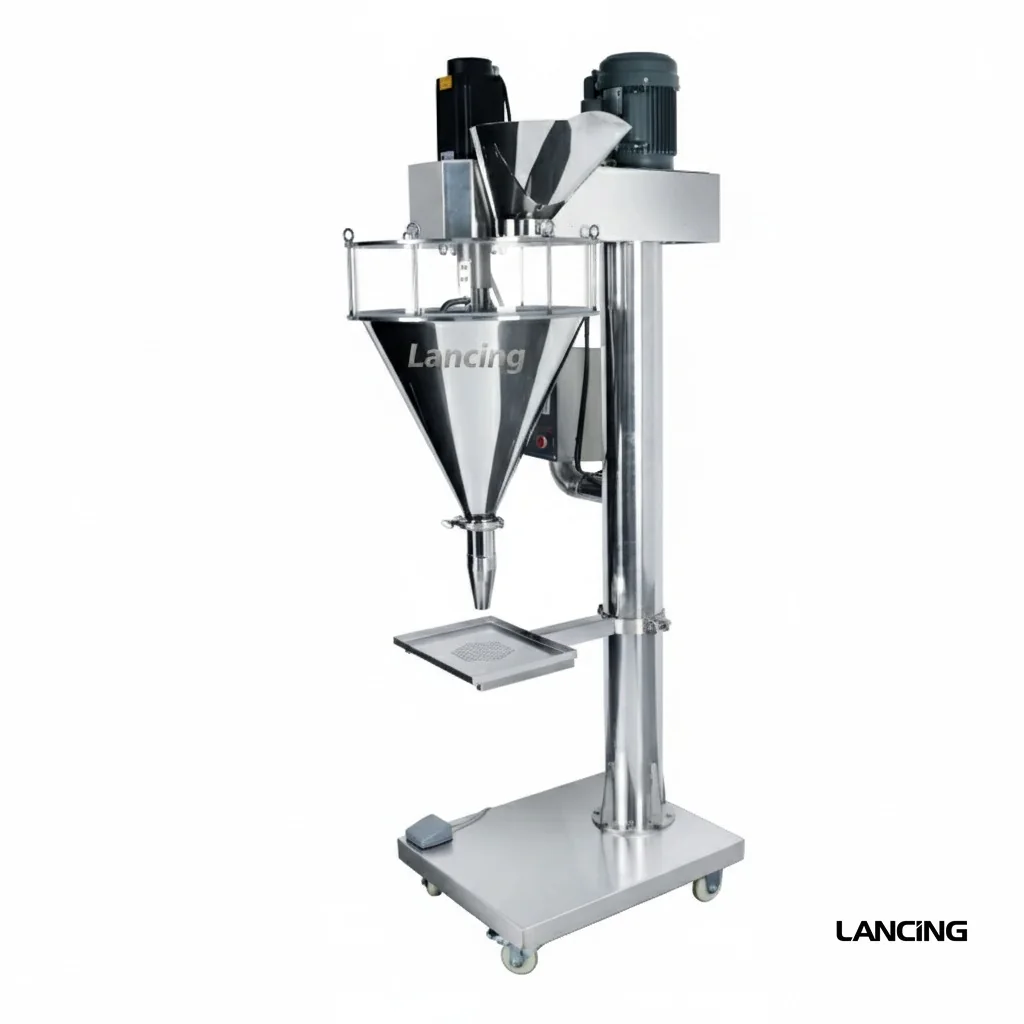
Compare the machine type, pack format and product handling route before asking for a quotation.
Understand what affects weight control and product giveaway in dry-product filling.
Open pagePlan realistic packs-per-minute based on product flow, dose and pack handling.
Open pageCompare the main machine routes before buying a filler.
Open pageCompare controlled weighing for free-flowing dry products, moderate outputs and flexible pack formats.
Open pageCompare higher-speed portion weighing for snacks, pet food, coffee, granules and mixed products.
Open pageCompare screw dosing for fine powders, dusty products and products that need hopper agitation.
Open pageShort answers for buyers comparing dry-product filling equipment.
Yes, if the weighing route, feeder and pack handling are selected around the product behaviour. Sometimes the feeder and hopper are more important than the weighing controller itself.
Not always. Some projects can be improved with different feeding, discharge, checkweighing or operator handling. Other projects need a complete weigh-fill-seal route.
Send product details, target weight, tolerance, output, current problems and any photos or short videos that show the product flow.
Lancing can advise whether a linear weigher, multihead weigher, auger filler, VFFS line or integrated route is the practical starting point.
Calibration, routine verification and downstream checkweighing have different purposes. Define each one so a good checkweigher result is not used to hide a drifting filler, and a filler reference check is not mistaken for legal approval.
| Control | Purpose | Minimum record |
|---|---|---|
| Zero / tare check | Confirms the weighing path starts from the correct reference. | Date, operator, empty condition, result and action. |
| Reference-weight check | Checks indication at suitable points in the working range. | Weight identification, nominal value, indication, deviation and status. |
| Product verification | Confirms the complete feeder and weighing process with actual material. | Product, target, settings, consecutive weights and statistics. |
| Checkweigher test | Confirms finished-pack classification and reject function. | Test packs, set-points, reject confirmation, alarms and line-stop result. |
| Legal-metrology assessment | Determines the applicable regulated instrument and use requirements. | Instrument/use classification and competent advice or conformity evidence. |
When checkweigher trends are used to adjust a filler, define the transport delay, number of packs used for the trend, correction limits, recipe ownership and fault behaviour. Individual pack rejects should not create rapid unstable corrections.
Keep raw results, accepted/rejected status and any automated adjustment in the batch record so the response can be audited.
Automatic gravimetric filling instruments and certain automatic weighing instruments used for trade are within the UK Measuring Instruments Regulations. Non-automatic instruments have a separate regulatory route. Packaged-goods controls remain the packer’s responsibility.
Calibration establishes the relationship between indication and a reference under stated conditions. Verification checks that the instrument or process meets an agreed requirement. Legal verification is a separate regulated concept.
Relocation, load-cell work, product build-up, mechanical contact, impact, unexplained drift, significant maintenance or a change in the normal working range should trigger review under the site procedure.
Yes, if data quality, tare, pack spacing, reject logic, delay and correction limits are validated. The feedback should not chase individual noise or conceal unstable filling.
The reference should be suitable for the expected quantity and decision. Resolution, capacity, uncertainty and traceability should be reviewed as part of the control method.
No. The applicable route depends on the instrument type and intended use, including whether it is used for trade. Obtain competent legal-metrology advice for the actual application.