
Flow and handling
Particle size, dust, fragility, stickiness, static, density variation and whether the product bridges or surges.
A practical route for compact weight filling where product flow is consistent and the buyer needs repeatable target weights without a full multihead system.
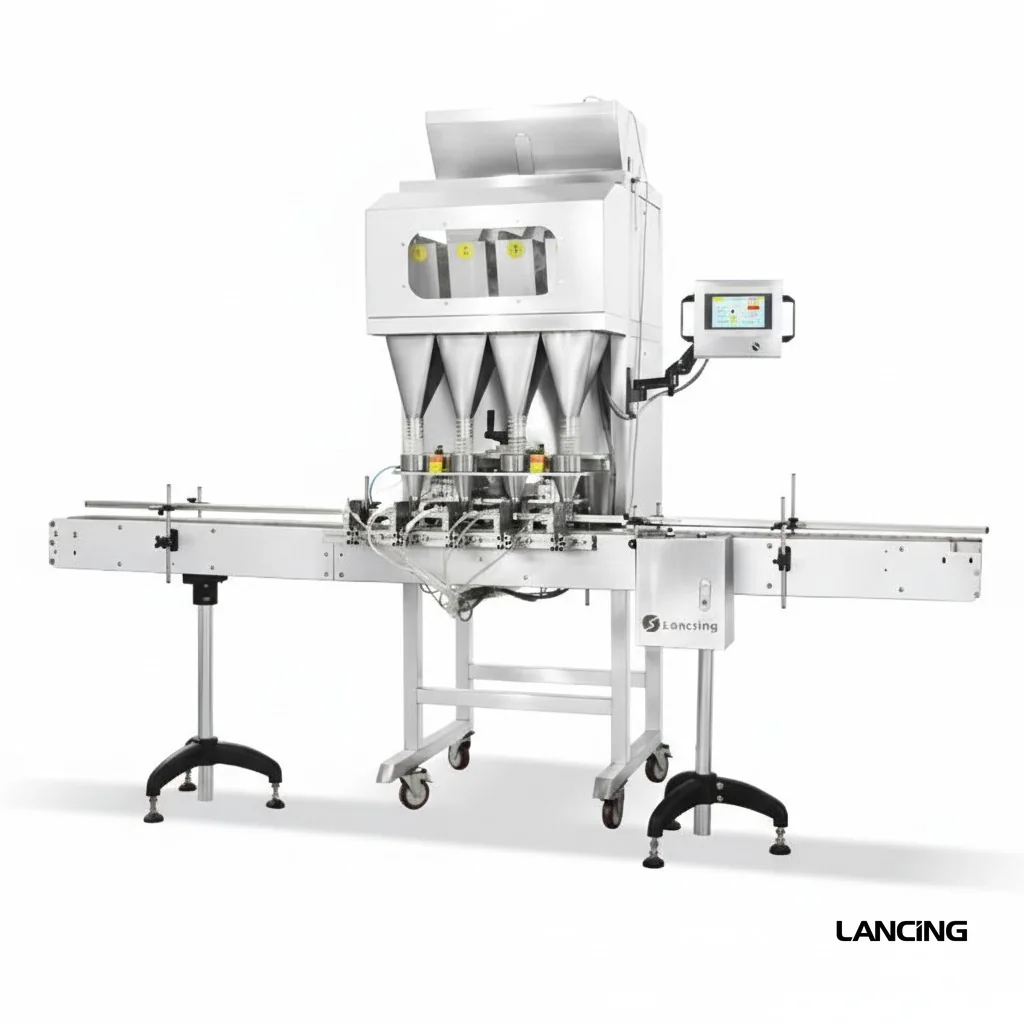
Use this route when the product is generally free-flowing and the project is driven by target weight, tolerance, pack presentation and operator workflow rather than liquid volume.
Start with the real product, not a catalogue category. Flow behaviour, target weight, acceptable tolerance, pack presentation and operator workflow determine whether this machine route is practical.
Use this route to compare a linear weigh filler against your product, target weight, pack format, output target and line constraints. The links below also help you compare related machine and application options before asking for advice.
These are the details that normally change the recommendation, model, controls, integration points and final line layout.
Particle size, dust, fragility, stickiness, static, density variation and whether the product bridges or surges.
Pouch, bag, jar, tub, bottle, sachet or downstream feed, plus the sealing or closing method after filling.
Target packs per minute, tolerance, operator involvement, cleaning frequency and future SKU changeovers.
Useful quick answers before you send your product and pack details.
A linear weigh filler is usually a good starting point for free-flowing dry products such as seeds, beans, rice, granules and small components.
Often yes, but the discharge height, timing signal, pack presentation and downstream sealing route need to be checked.
No. Auger filling is normally a stronger comparison for fine powders or products that do not flow consistently through vibratory feed channels.
That gives Lancing enough information to compare a linear weigher, multihead weigher, auger filler or integrated bagging line.
Product is metered from the supply hopper by controlled vibration into a weigh hopper or weighing path supported by a load cell. The control normally uses a faster bulk stage and a slower trim stage, then allows for material still in flight before the dose is released.
Feeder geometry, vibration settings, hopper level and product condition determine whether the flow is stable enough to approach target predictably.
Mechanical contact, vibration from nearby equipment, draughts, product build-up and an unstable support frame can affect the measurement. Zero and verification checks should be part of setup.
The outlet, chute, bag clamp or container support must prevent product loss and allow the next cycle to start without trapping material.
| Variable | Why it changes the result | What to record in a trial |
|---|---|---|
| Bulk density and particle distribution | They change feeder throughput and the quantity still moving when vibration stops. | Product batch, density or condition, coarse/fine settings and drift after refill. |
| Target weight | A setting that works at one dose may not provide the same relative tolerance or cycle time at another. | Smallest, normal and largest targets with separate distributions. |
| Hopper level | Head pressure and product availability can alter the feed rate. | Results at agreed normal low and high levels and during refill. |
| Static, dust or bridging | Product may cling, release unpredictably or contaminate the load cell and discharge area. | Visible build-up, cleaning interval, lost product and any stoppages. |
| Pack presentation | Manual bags, clamps, jars and conveyors add different cycle times and loss points. | Sustained finished-pack output, operator actions and mis-presented packs. |
Feeder amplitude, product flow, target weight, hopper level and pack presentation change the distribution. State those conditions with the mean, standard deviation, minimum and maximum.
Zero or tare the system, verify it with suitable traceable test weights across the working range, run representative product and compare the resulting distribution with the agreed acceptance record.
Only some free-flowing powders suit open vibratory feeding. Cohesive, aerated or dusty powders should also be compared with an auger route and tested for bridging and clean cut-off.
A coarse feed approaches target and a fine feed trims the dose. The stop point and material still travelling after the feeder stops must be tuned for the actual product.
It can provide feedback if both controls are designed for it, but correction limits, sample filtering, reject logic and safe behaviour during faults must be agreed.