
Flow and handling
Particle size, dust, fragility, stickiness, static, density variation and whether the product bridges or surges.
A controlled dosing route for powders and less free-flowing dry products where hopper design, screw selection and dust management matter.
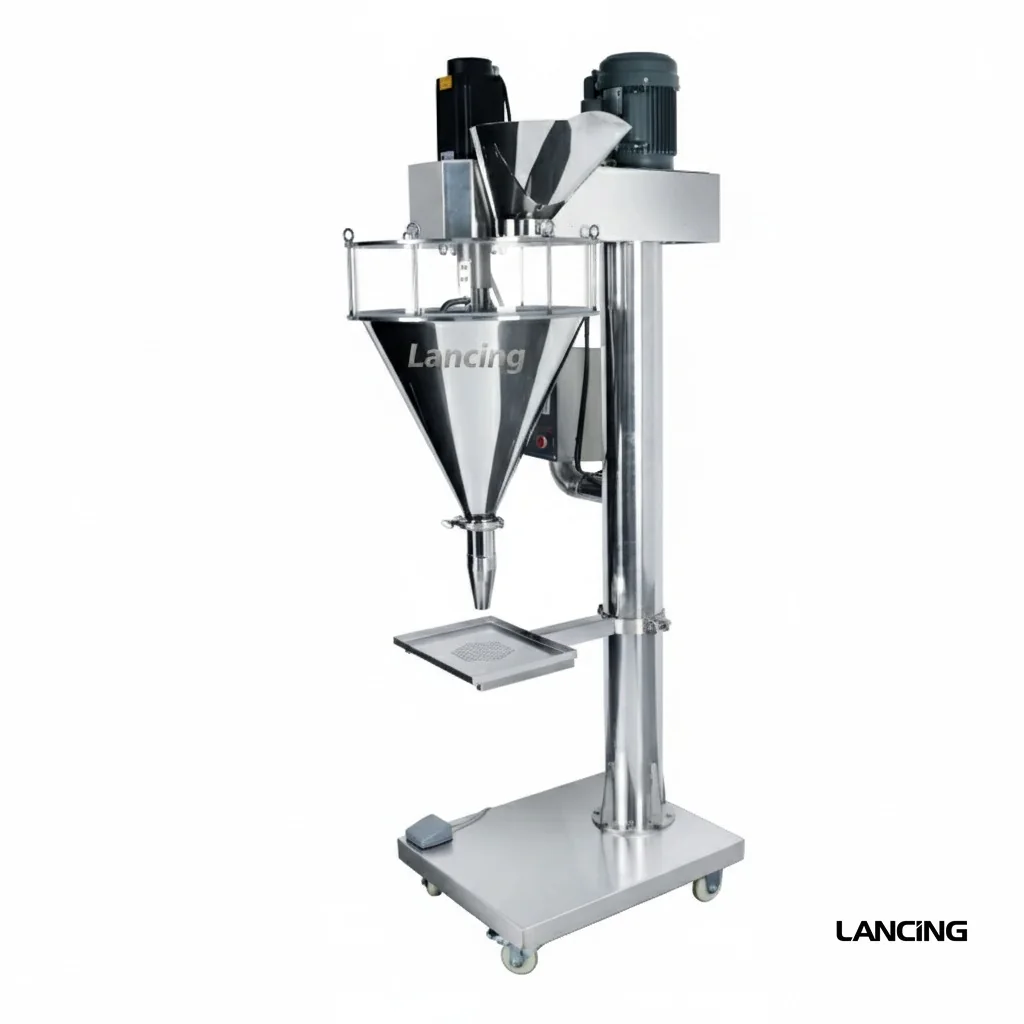
Auger fillers are normally compared where powder behaviour, dust, density variation and controlled cut-off are central to the project. Hopper agitation, tooling, fill range and cleaning access should be reviewed early.
Start with the real product, not a catalogue category. Flow behaviour, target weight, acceptable tolerance, pack presentation and operator workflow determine whether this machine route is practical.
Use this route to compare an auger filler against your product, target weight, pack format, output target and line constraints. The links below also help you compare related machine and application options before asking for advice.
These are the details that normally change the recommendation, model, controls, integration points and final line layout.
Particle size, dust, fragility, stickiness, static, density variation and whether the product bridges or surges.
Pouch, bag, jar, tub, bottle, sachet or downstream feed, plus the sealing or closing method after filling.
Target packs per minute, tolerance, operator involvement, cleaning frequency and future SKU changeovers.
Useful quick answers before you send your product and pack details.
Auger filling is commonly compared for powders, spices, dry blends and additives where controlled screw dosing is required.
Yes. Auger fillers can be configured around many pack formats, including jars, tubs, bottles, pouches and VFFS lines.
Bulk density, dust level, target fill weight, pack format, accuracy expectation and any cleaning or containment requirements are important.
That gives Lancing enough information to compare a linear weigher, multihead weigher, auger filler or integrated bagging line.
An auger filler meters powder by rotating a screw through a defined number of turns or pulses. It can be selected because the powder does not feed reliably through an open vibratory route, but the way mass is established or verified must be described accurately.
Bulk density, aeration, bridging and compaction affect screw fill. The hopper, agitator and refill method must be tested with normal product batches.
Tooling is chosen around product behaviour and dose range. One setup should not be assumed to cover every target without a change in accuracy or cycle time.
State whether the machine fills onto a scale, uses a calibrated auger recipe, or is checked downstream. Each method gives different process and legal evidence.
Detailed auger machine, powder-flow and powder-cleaning content is owned by Auger Fillers and Powder Fillers. WeighFillers.co.uk retains the comparison between auger dosing and weight-based filling, plus the weighing or checkweigher interface.
State the product, target, screw/tooling, hopper condition, agitation, sample size, weighing reference, mean and spread. A value from one stable powder cannot be transferred to a different product or density without testing.
An auger meters product by controlled screw movement. It may be calibrated volumetrically, combined with a weighing platform or verified by a downstream checkweigher. The control architecture must be stated clearly.
A given screw movement can deliver a different mass when powder density or aeration changes, so representative batches and the planned hopper/agitation arrangement must be tested.
Free-flowing granules or powders may suit a vibratory weigh filler. Cohesive, aerated, dusty or poorly flowing powders often justify an auger comparison.
Identify retained-product points, removable contact parts, cleaning tools and inspection access, then run a documented changeover against the customer cleaning standard.
It can be engineered to adjust a set-point or correction factor, but filtering, limits, recipe control and fault behaviour need validation so individual rejects do not cause unstable correction.