
Accuracy and tolerance guide
Understand what affects weight control and product giveaway in dry-product filling.
Open pageCompare practical ways to improve dust during weighing and filling in dry-product filling.
Dust control is usually caused by the relationship between the product, hopper, feeder and target dose. A filler that works well on one dry product may struggle when dust during weighing and filling changes the flow into the weighing system.
The solution may be a different feeder, a modified hopper, slower feed control, product agitation, dust extraction, a checkweigher or a different packing layout. The most reliable route is chosen after looking at the product behaviour and the output target together.
Typical projects include flour, powders, spices, additives and chemical products. Lancing can compare the options before the line is priced, so the specification is based on the problem being solved rather than only the headline machine type.
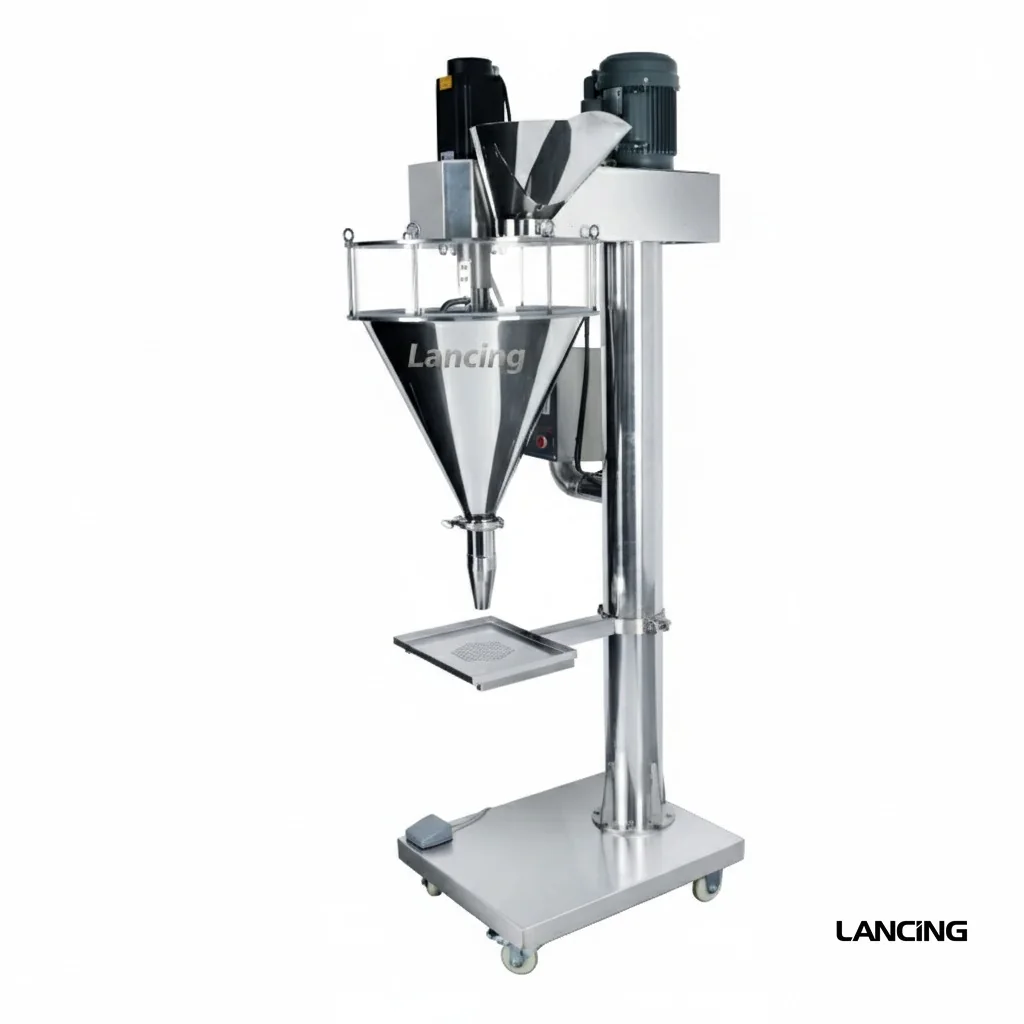
Compare the machine type, pack format and product handling route before asking for a quotation.
Understand what affects weight control and product giveaway in dry-product filling.
Open pagePlan realistic packs-per-minute based on product flow, dose and pack handling.
Open pageCompare the main machine routes before buying a filler.
Open pageCompare controlled weighing for free-flowing dry products, moderate outputs and flexible pack formats.
Open pageCompare higher-speed portion weighing for snacks, pet food, coffee, granules and mixed products.
Open pageCompare screw dosing for fine powders, dusty products and products that need hopper agitation.
Open pageShort answers for buyers comparing dry-product filling equipment.
Yes, if the weighing route, feeder and pack handling are selected around the product behaviour. Sometimes the feeder and hopper are more important than the weighing controller itself.
Not always. Some projects can be improved with different feeding, discharge, checkweighing or operator handling. Other projects need a complete weigh-fill-seal route.
Send product details, target weight, tolerance, output, current problems and any photos or short videos that show the product flow.
Lancing can advise whether a linear weigher, multihead weigher, auger filler, VFFS line or integrated route is the practical starting point.